
Project updates
Project description
Employees play a significant role in industry. Small-batch manufacturing in particular often involves manual work that requires special skills and quick adaptation to the task at hand. In Satakunta, for example, engineering products and components are manufactured for the needs of various industries where full automation of production is not profitable. However, exposure to repetitive movements and heavy loads increases the physical and mental strain on employees. In addition to industry, physically demanding work is also common in social and health services, where employees often work in awkward positions.
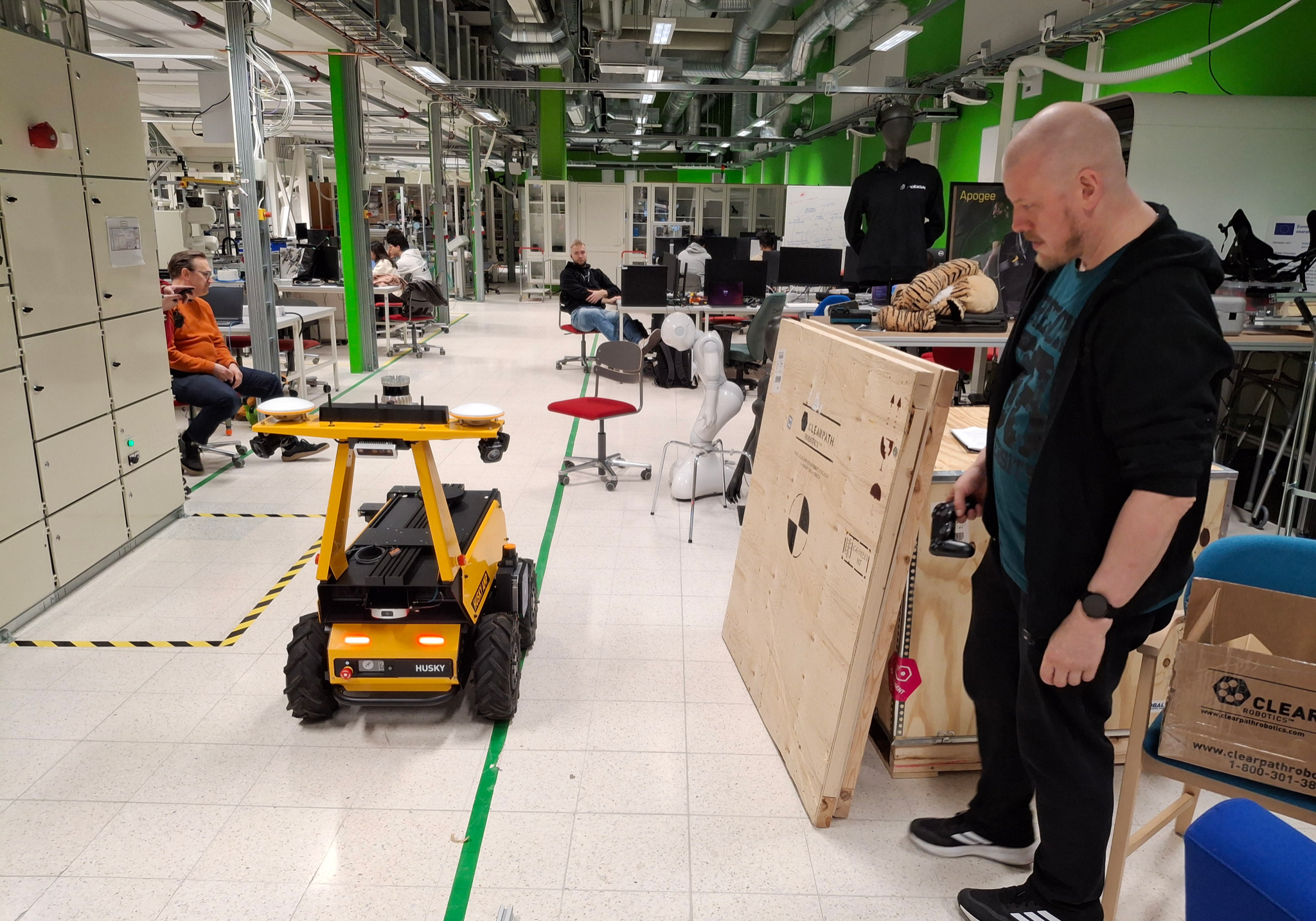
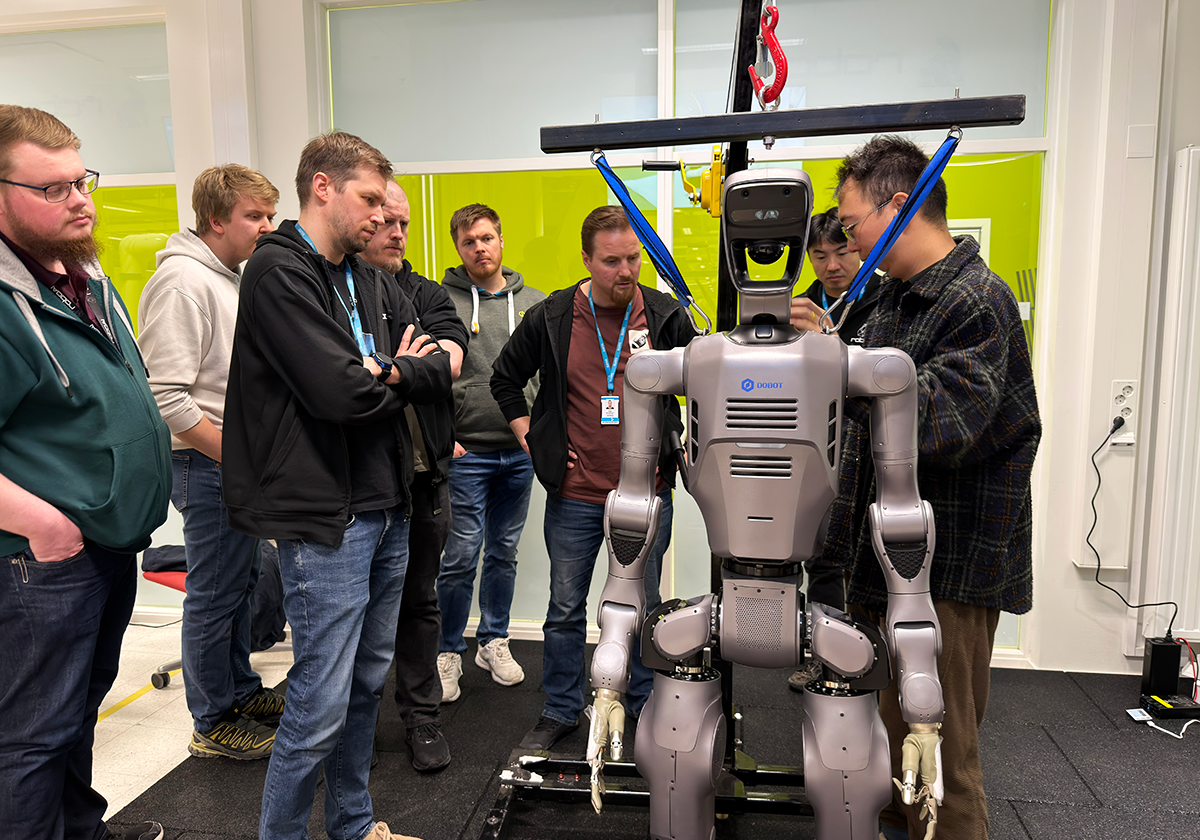
Mobile robotics offers opportunities to streamline tasks in industry and social and health services by assisting employees and handling the necessary logistics. Mobile robots can, for example, handle the transport of goods, freeing up staff for tasks that require expert knowledge and social interaction skills. In addition to wheeled mobile robots, four-legged mobile robots have entered the market that can move nimbly in challenging terrain such as outdoor areas, stairways, and narrow corridors. The project is looking into how mobile robots can be used in jobs that need the ability to move around in tough places.
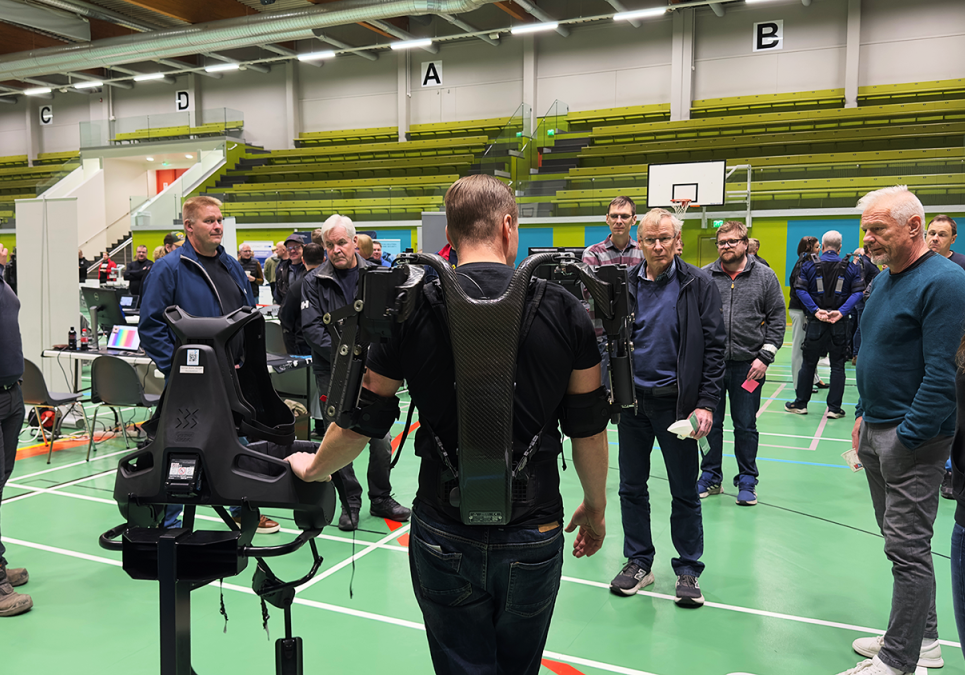
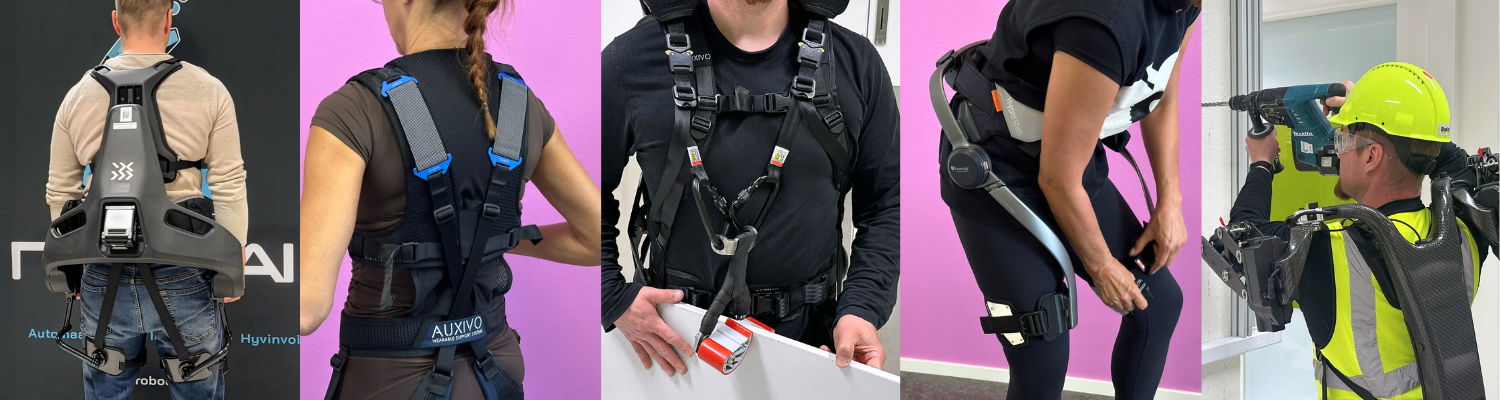
Maintaining employee health is essential for industrial success and the functioning of social and health services. Lightening workloads and improving ergonomics increase work capacity and contribute to longer careers. Exoskeletons, or external support frames, can improve ergonomics and lighten work tasks that involve repetitive movements and handling heavy loads. Exoskeletons can also be used to reduce the risks of physical and mental strain and to support the employee's body.
This project is piloting centralised fleet control of mobile robots and exoskeletons. Centralised, predictive, and task-aware control combines devices from different manufacturers into a single functional entity that enables efficient and flexible assistance for employees. Task recognition enables large-scale collaboration between humans and robots; people and robots work together as a fleet with a common goal.
The project is being carried out in collaboration with Centria University of Applied Sciences' RoboFlex project.
Contact information:
Project manager
Ville Konttinen
ville.konttinen@samk.fi
tel. 050 434 5527
Project objectives
The main objective of the project is to develop the competitiveness and production of companies in the Satakunta region by utilising mobile robotics and exoskeletons that utilize fleet intelligence. The project has five objectives:
- To communicate information to companies through technology demonstrations.
- To investigate the suitability of mobile robots and exoskeletons for different tasks.
- To test and demonstrate technologies to companies and organize RoadShow events.
- To develop platform-independent fleet control for mobile robots and exoskeletons.
- Learn from project partners and develope solutions to meet the needs of companies.
These objectives are supported by various work packages and measures aimed at promoting the adoption of technological solutions and developing them to meet the needs of companies.
Articles