
Can a horse be encountered in virtual reality almost as authentically as in real life? An ongoing multisensory stimulation study is currently investigating how virtual animal encounters affect human emotions, relaxation, and wellbeing.
Animal-assisted methods have become increasingly common in education, rehabilitation, and wellbeing services in recent years. The presence of a live animal is known to support stress regulation, emotional expression, and relaxation. But can similar experiences also emerge in virtual reality?
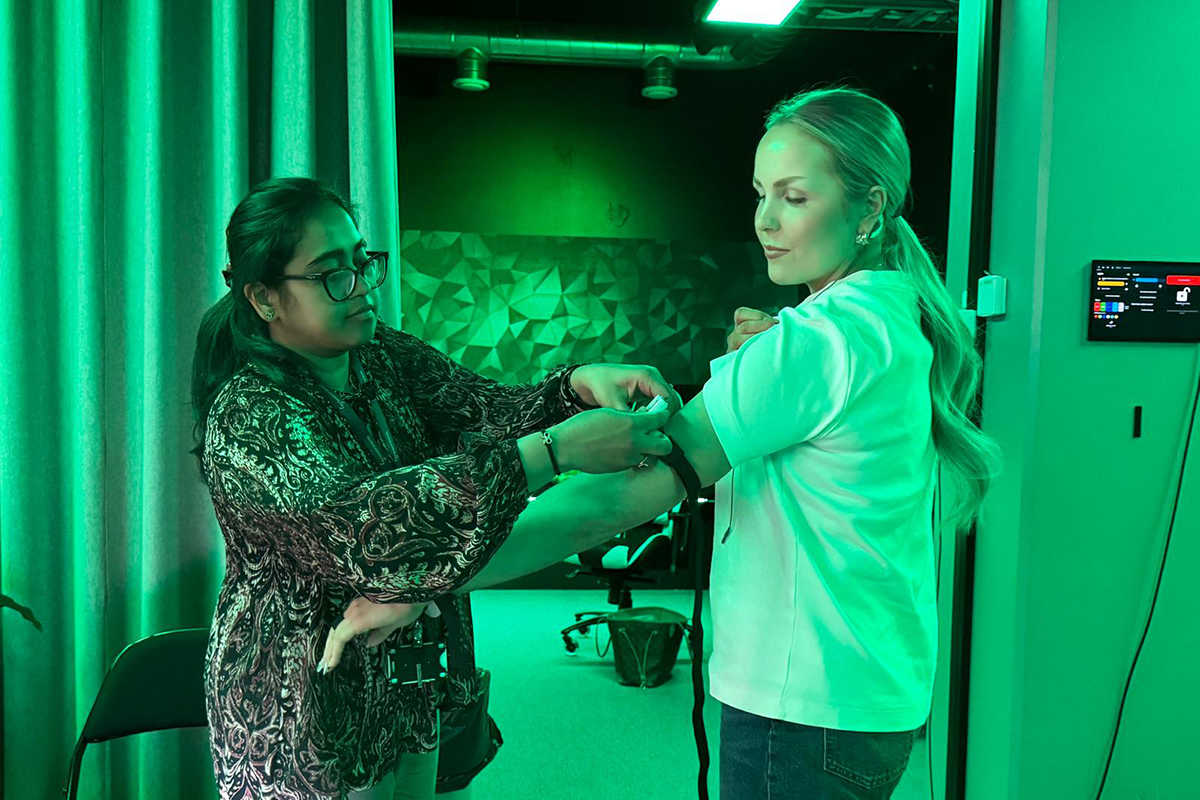
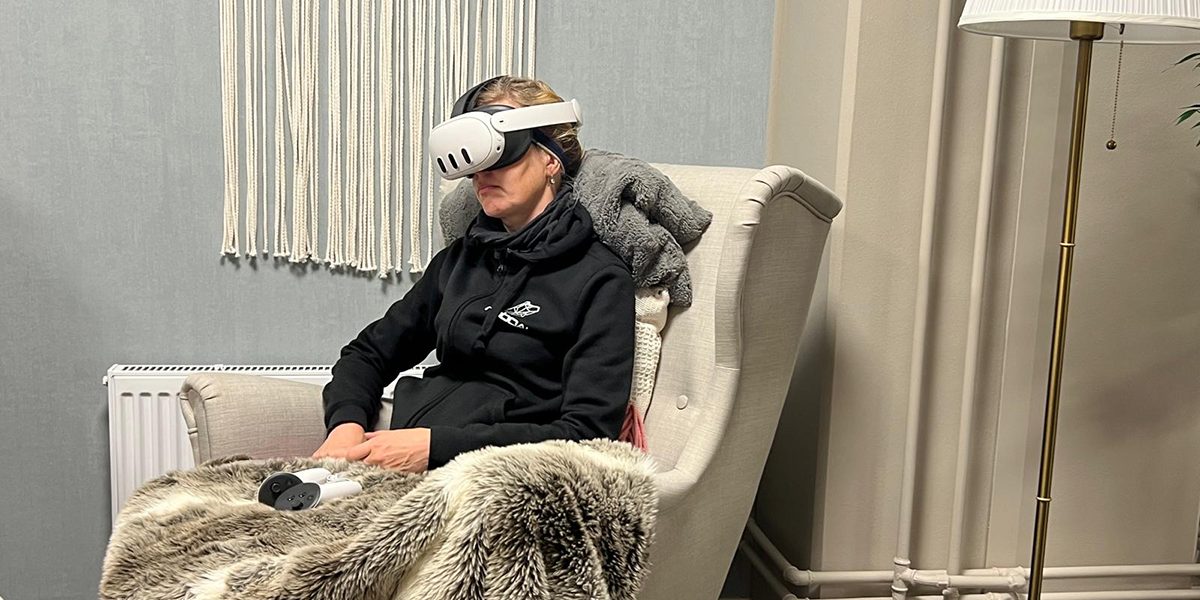
This question is currently being explored in a multisensory stimulation study carried out in collaboration between the EHEÄ project and Wildie Oy. In the study, participants experience a virtual horse encounter in a VR environment. Participants are transported to a summery virtual meadow surrounded by horses: natural sounds can be heard, the scent of hay fills the air, and participants can gently stroke a horse approaching them. The experience combines visual, auditory, tactile, and olfactory stimuli to create an immersive and realistic encounter.
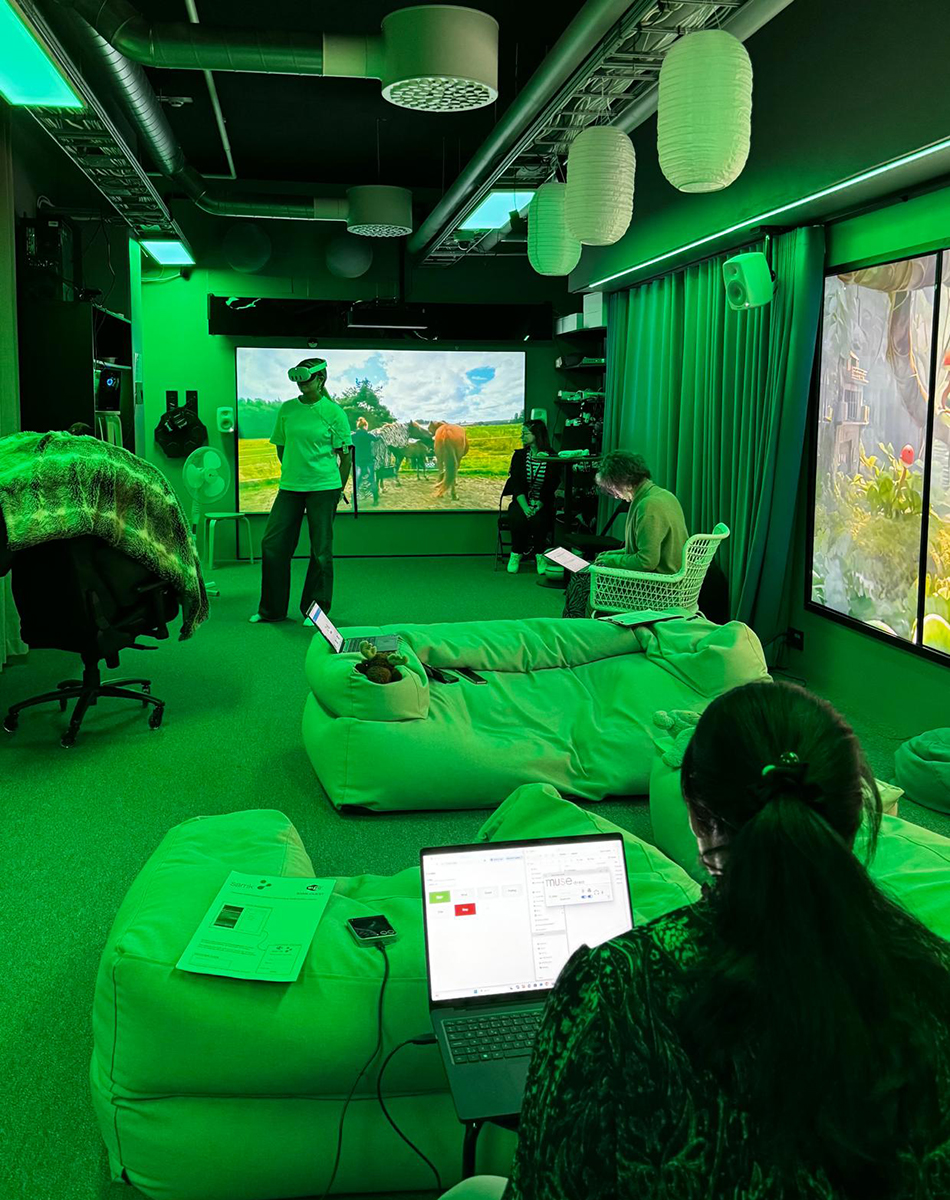
In the study, participants experience a virtual horse encounter in a VR environment.
Ongoing research expands earlier pilot study
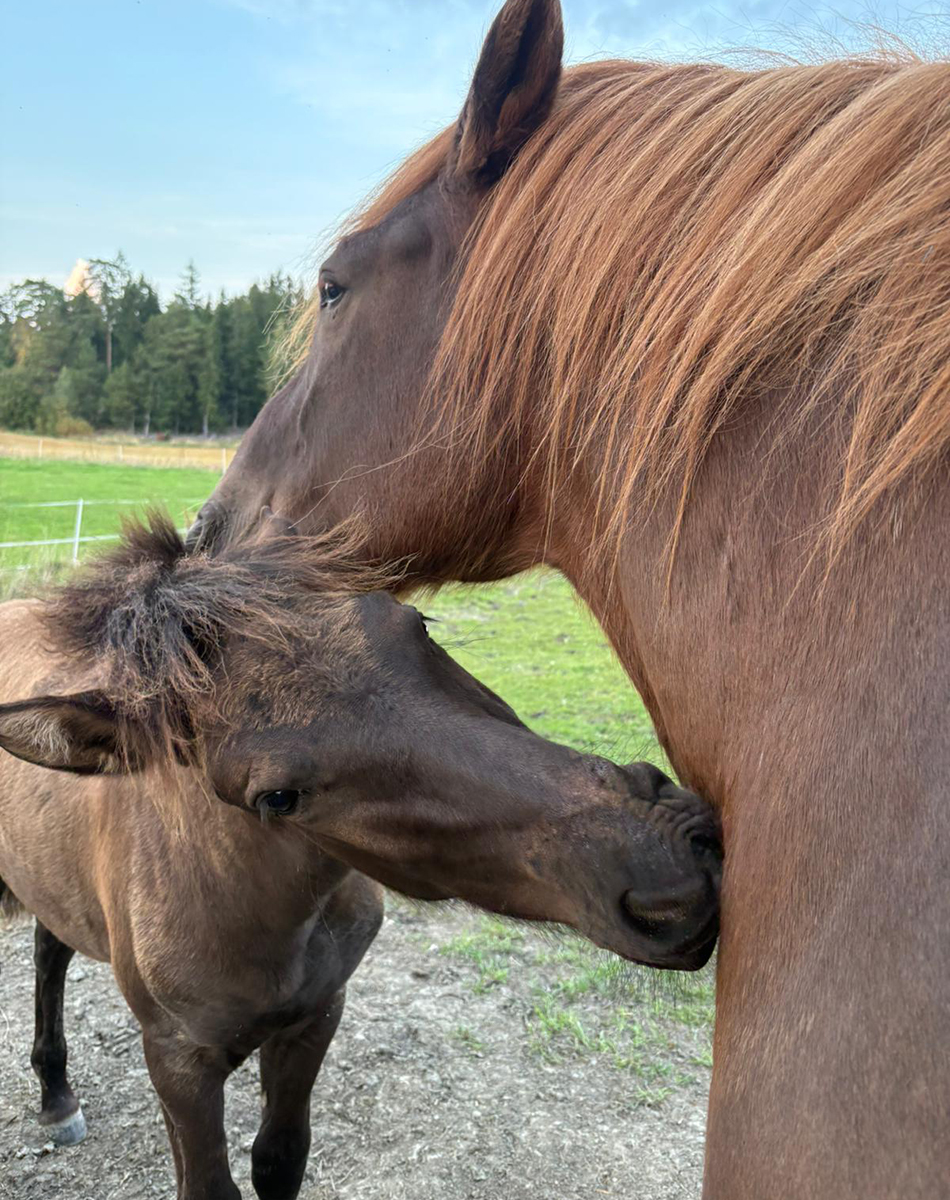
The current study builds on an earlier pilot study in which three participants experienced both a real-life horse encounter in a pasture and a corresponding virtual experience. During the pilot phase, researchers monitored participants’ brain activity, relaxation levels, and emotional experiences in both situations. The results raised particular interest in how strongly a virtual animal encounter can influence a person’s sense of wellbeing and presence.
The ongoing study expands the topic further. Approximately 20 participants are taking part in the research, experiencing a horse encounter in virtual reality through multisensory stimulation. Researchers are examining the emotions, physical reactions, and wellbeing effects that the experience evokes in participants.
Virtual reality supporting wellbeing
The possibilities of virtual reality in wellbeing services are attracting growing interest, as technology may provide new solutions in situations where the use of real animals is not possible due to allergies, accessibility, or safety reasons. At the same time, the study helps researchers understand how authentic a digital animal encounter can feel to humans.
The virtual environment used in the study has been designed to feel as calming and natural as possible. The goal is to create an experience that feels safe, immersive, and emotionally meaningful for participants, almost like a real encounter with an animal. The results of the study will be published later.
Interested in this topic?
More information: Senior Researcher Jenni Huhtasalo, +358 44 710 3047, jenni.huhtasalo@samk.fi


The multisensory stimulation study is part of the EHEÄ project — from experiences, creativity and technology to well-being, vitality and smart services. The project is implemented by Satakunta University of Applied Sciences, Sataedu, Prizztech Oy, and Tampere University, and is co-funded by the European Union.
The study is carried out in collaboration with Wildie Oy, which has been responsible for the design and production of the virtual experience and research environment.